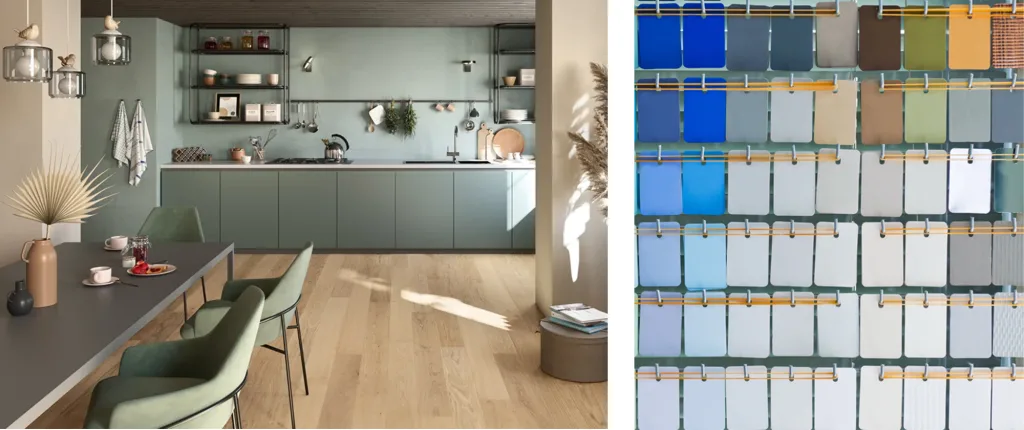


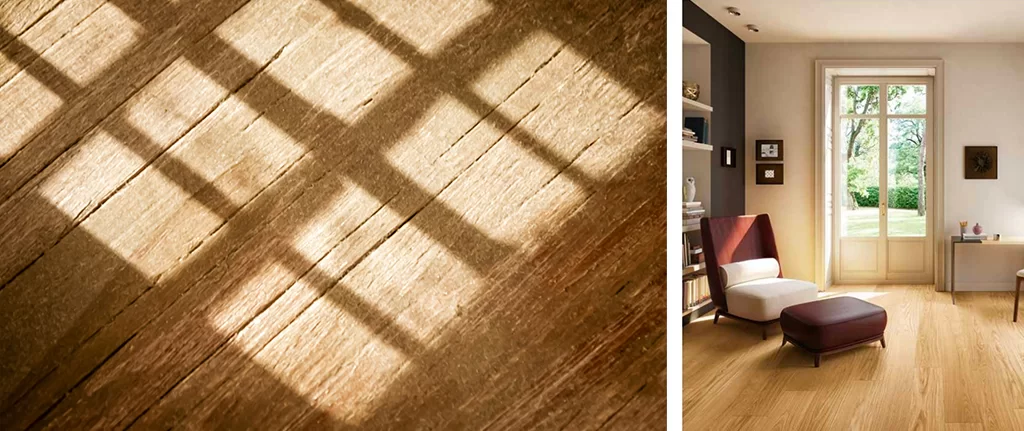
The oxidation of parquet is a common and natural effect caused by exposure to sunlight and is a phenomenon that affects all types of wooden floors. As we have mentioned in other instances, the beauty of parquet lies in its being made of a living material such as wood.
At the same time, however, the living and ever-evolving nature of wooden flooring presents a challenge you may need to address. Parquet is subject to oxidation, which means that the color of the boards can change, sometimes significantly, over the years.
What are the main causes of oxidation? What are the best practices for effective parquet maintenance?
The Effects of Light on Wooden Flooring
Wood, in addition to being alive, is photochromic and photosensitive, and is affected by exposure to both sunlight and simply the air.
For this reason—and you may have noticed this when moving furniture and furnishings for a small move or during major cleaning—the parquet tends to show a different shade from the original. This process begins almost immediately and is particularly pronounced in the first six months after installation.
Subsequently, the phenomenon slows down but does not completely stop.
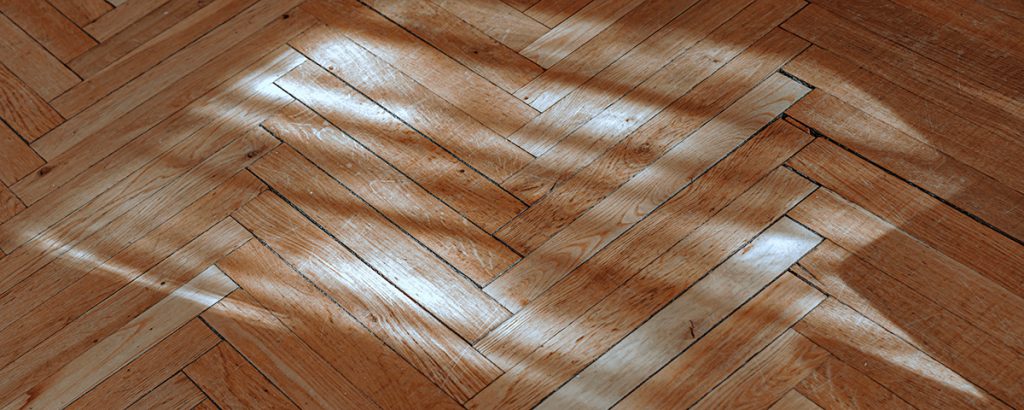
Parquet Varieties Most Prone to Oxidation
Although no wood species is exempt from oxidation, the influence of UV rays and other atmospheric agents on parquet varies greatly from wood to wood. Just to give a few examples, teak, found in the Dream collection, tends to lighten, while walnut, typical among others in the Signature collection, tends to darken to a deep brown color with red veins.
The same darkening phenomenon can occur with maple, iroko, and doussié, or with European cherry parquet.
Compared to other species, oak has a less pronounced oxidation, which is why it is well-suited for environments with high light exposure.

Examples of Parquet Oxidation
How to Protect Wooden Flooring from Oxidation
Before installation, parquet is already subjected to treatments that make it more resistant and slow down the oxidation process, but there are also effective and simple measures you can take to protect your parquet from color changes.
For example, to avoid too direct and continuous sun exposure, you might choose to use filter blinds, or, since oxidation is most noticeable on boards that have remained uncovered by furniture, rugs, and accessories for longer periods, the key is to change their position frequently. The parquet will not show signs of aging; you will not risk getting bored or tired of dealing with an environment and design that are perpetually identical.