


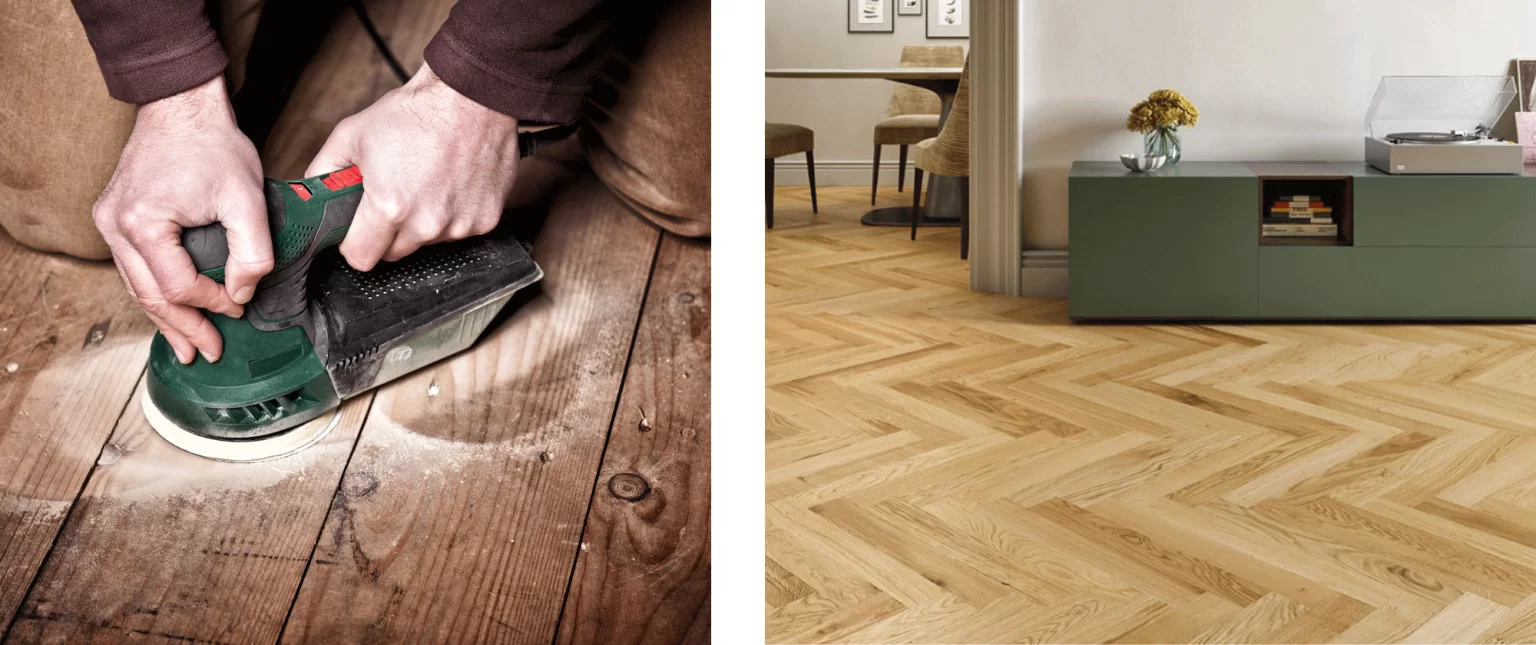
Sanding parquet is a fundamental operation to understand because a wooden floor is still a delicate surface that can show signs of wear and time over the years. It can get scratched, perhaps due to those little stones you didn’t notice that got stuck under your shoes; or suffer, years after installation, from the inevitable wear of frequent foot traffic. It can dent and damage in some areas, and lose color: in the worst-case scenario, due to humidity and temperature fluctuations, the boards can come loose or warp.
Find out why you should prefer parquet over wood-effect gres flooring
Parquet Sanding: How Often?
Parquet sanding is a multi-phase operation through which you can restore the beauty and original look of your wooden floor.
Prefinished parquet does not require initial sanding, as it is already ready for use because it is already varnished and oiled. You can perform subsequent sanding after seven to eight years of use, and unless you are a true DIY expert, our advice is to seek the intervention of a professional.
When restoring parquet, the duration and type of operation depend greatly on the condition of your wooden floor, as well as the method used by the parquet installer.

Dream Oak Cement Collection.
Herringbone pattern
Rough sanding, second sanding, filling, and sanding of parquet
The different steps of the repair are summarized as: first sanding, also known as rough sanding, second sanding, filling, and sanding.
With rough sanding – or first sanding of the parquet – coarse-grained discs and abrasive papers are used on the most evident irregularities, removing the surface finish of the parquet, especially if in poor condition. The second sanding, usually with medium-grained papers, removes the marks of the rough sanding and makes the parquet perfectly smooth, while for any small detachments and separations between the boards, filling is done using special pastes. The excess filler is finally removed with sanding, which is done with very fine-grained brushes, and serves to prepare the wooden floor for the final cleaning.
Cleaning and Maintenance for a Healthy Parquet
Preventing scratches and wear is certainly the best precaution you can take to preserve your wooden floor for as long as possible and, therefore, postpone sanding operations.
In routine cleaning phases, the materials you choose are also important: avoid steam mops or floor-washing robots that have too high temperatures, and prefer rectangular mops and long-pile cotton microfiber cloths. These precautions, which you can see in detail in the article dedicated to parquet cleaning tips, if combined with Woodco cleaning products, will help you preserve the natural characteristics of your wooden floor for as long as possible.
In routine cleaning, for example, Neutral Cleaner slows down the appearance of signs of time on varnished parquet, and provides treated surfaces with a prolonged
bactericidal action, even in the presence of pets. In the periodic maintenance of parquet treated with Osmo Oil-Wax, Liquid Wax Cleaner allows you to give new life to a parquet that has dull, undernourished areas or has suffered visible wear damage.