

Parquet is one of the most refined and durable choices for furnishing a home or office. Its timeless beauty makes it ideal for elegant environments, but it requires constant attention to maintain its splendor over the years. Proper installation and regular maintenance are essential to prevent damage and wear. This guide will provide you with all the necessary details to ensure your parquet remains in perfect condition, exploring installation techniques, surface treatments, and the best cleaning and protection tips.
How to Install Parquet: A Complete Guide
Installing parquet is a delicate process that requires specific skills. Choosing the right installation technique is crucial for achieving an impeccable aesthetic result and optimal durability. The main methods are glued installation and floating or click installation.
Glued installation involves using a special adhesive to fix the boards to the subfloor. This method offers excellent stability and quietness, minimizing wood movement due to temperature and humidity variations. However, it requires a waiting time of 2-3 days before the floor can be used. It is particularly suitable for environments with underfloor heating, as the adhesive improves thermal conductivity, making the installation more energy-efficient.
In contrast, floating installation is a less invasive and quicker solution, perfect for those who want to try DIY. The boards interlock with each other thanks to a click system, without the need for adhesives. This method is ideal for those who need to remove or replace the floor in the future, as it does not require interventions on the existing subfloor. Additionally, the parquet is laid on a sound-absorbing underlay that reduces footstep noise and offers additional moisture protection. Floating installation is recommended in environments subject to frequent renovations or for those seeking a quick and practical solution.
If you wish to delve deeper into installation techniques, you can consult the complete guide on how to install parquet.

Floating Parquet: The Advantages
Opting for floating installation offers numerous advantages, especially in terms of ease of installation and versatility. This method is very popular in Northern European countries, where quick and reversible installation is particularly appreciated for its functional characteristics. Parquet can be laid over an existing floor without having to remove it, making floating installation ideal for quick and non-invasive renovations.
Moreover, the possibility of inserting a vapor barrier between the screed and the boards ensures effective protection against moisture, reducing the risks of swelling or deformation of the wood over time. An additional advantage of this technique is its compatibility with environments equipped with underfloor heating, as the floating system allows for even heat distribution.
For those looking to keep costs low, floating installation represents a competitive choice. Not only do you save on adhesive costs, but also on labor costs, as the simplicity of the interlocking system reduces installation times. This method is also advantageous from an ecological point of view, as it allows for easier recovery and recycling of materials.
Varnished, Oiled, or Waxed Parquet?
Once you have decided on the installation method, it is necessary to choose the most suitable treatment to protect and enhance the parquet. There are different finishes, each with specific advantages in terms of maintenance and aesthetic yield. The three main options are varnishing, oiling, and waxing.
Varnished parquet is covered with a transparent layer of varnish that offers robust protection against scratches and stains, making it easy to clean. However, varnishing can give the wood a less natural appearance, as it reflects light uniformly, sometimes masking the natural beauty of the wood grain.
In oiled parquet, on the other hand, the oil penetrates the wood pores, leaving the surface porous and matte. This type of treatment requires more frequent maintenance than varnish, as the oil must be reapplied periodically to keep the floor protected and shiny. Oiling gives the parquet a more natural look, enhancing the grain and texture of the wood.
Waxing is a less common but very charming finish. It gives the parquet a warm appearance and a soft touch, but like oiling, it requires regular application. An advantage of waxing is that it can be easily removed and reapplied, allowing you to periodically renew the appearance of the floor without invasive interventions.
To discover which treatment is best suited to your needs, consult the article on varnished, oiled, or waxed parquet.
How to Clean Parquet: Practical Tips
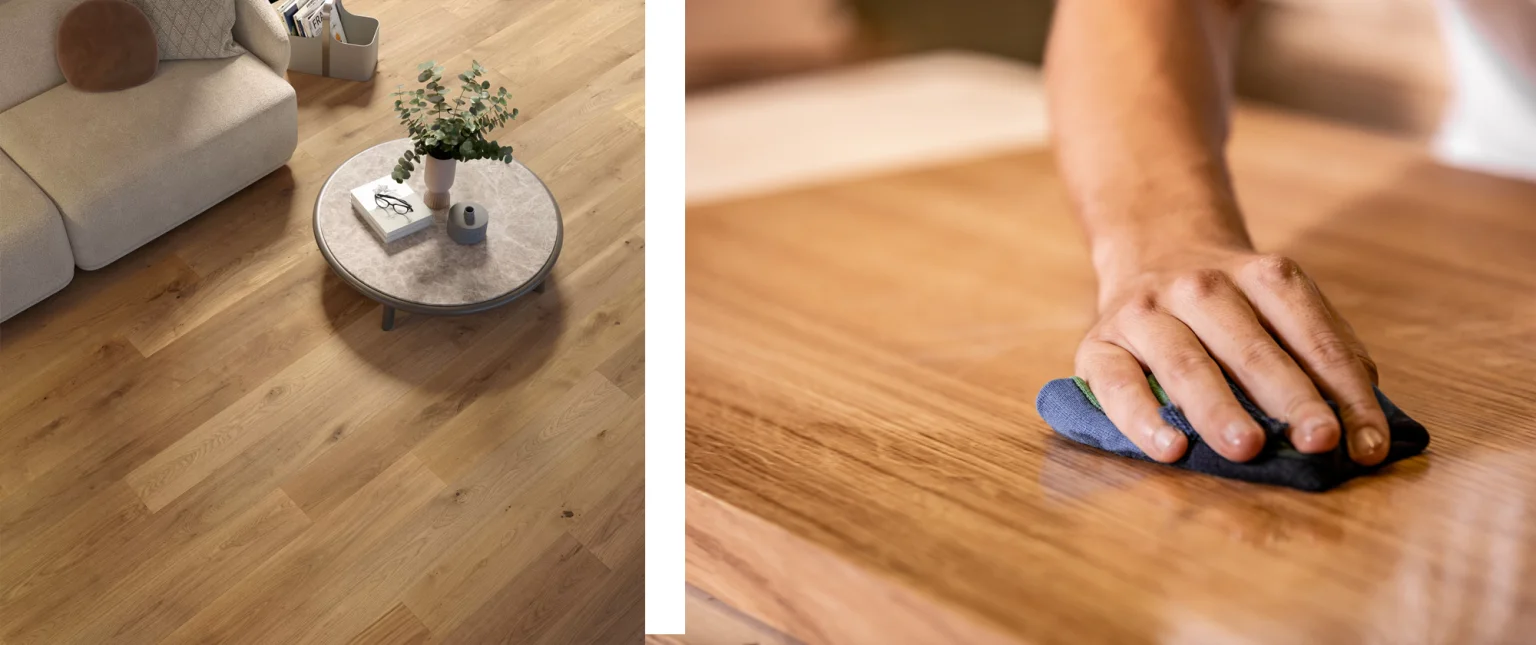
Keeping parquet in perfect condition requires regular care and suitable products. Daily cleaning can be done with a soft-bristle broom or a vacuum cleaner specifically for parquet, which helps remove dust and debris without scratching the surface. For a deeper clean, a microfiber cloth slightly dampened with warm water is sufficient. It is important to avoid excessive use of water, as moisture can penetrate the wood joints, causing swelling.
By adding a few drops of neutral detergent, such as those from the Woodco Care line, you can clean the floor without damaging the surface. Always avoid using aggressive or acid-based products, such as bleach, which could deteriorate the wood and compromise its finish.
Oiled parquet requires specific detergents that nourish the wood, preserving its natural beauty. Products like Soft Cleaner Aloe ensure effective cleaning, while for more stubborn stains, a stronger detergent like Intensive Cleaner can be used.
What Damages Parquet?
Parquet, although resistant, can suffer damage if not treated with care. One of the main enemies of wood is moisture, which can cause swelling, deformation, and stains. In particularly humid environments, it is advisable to use dehumidifiers or maintain adequate ventilation to prevent moisture buildup.
Exposure to sunlight can cause oxidation, gradually changing the color of the wood. Some wood species, like teak, tend to lighten, while others, like walnut, darken significantly. To reduce the effects of oxidation, it is recommended to use blinds or curtains to shield direct light and to periodically rotate rugs or furniture.
Scratches also pose a risk to parquet. High heels, heavy furniture moved without protection, or pets can damage the surface. Using rugs in high-traffic areas and applying felt pads under furniture are simple but effective solutions to prevent damage.

Parquet Oxidation
Parquet oxidation is a natural phenomenon that affects all types of wood exposed to sunlight. In the first few months after installation, the wood may undergo more noticeable color changes, but over time the process stabilizes. Some types of wood, like walnut, tend to darken, while other species, like teak, may lighten.
To reduce oxidation, simple measures can be adopted, such as using curtains or shutters to limit sun exposure. Additionally, rotating rugs and furniture helps prevent some areas of the floor from remaining covered for long periods, preventing color differences between various areas of the parquet.
Parquet Sanding: When and How to Do It
Over the years, it is inevitable that parquet will show signs of wear, such as scratches, discoloration, or loss of shine. Sanding is a technique that allows you to remove the surface layer of wood, eliminating defects and restoring the floor to its original splendor. This intervention can be carried out every 10-15 years, depending on the level of wear.
The sanding process requires the use of specific machines that remove a thin layer of wood. After sanding, the parquet is treated with oils or varnishes to protect it again and restore its shine. It is important to rely on professionals to avoid excessively damaging the wood surface, especially in the case of parquet with reduced thickness.
To explore the topic further, read the guide on when and how to sand parquet.
How to Protect Parquet from Moving or Fireplaces
During a move, parquet can suffer damage if not adequately protected. Let’s see how to protect parquet from moving or fireplaces.
To avoid scratches or dents, it is advisable to cover the floor with corrugated cardboard or felt, creating a protective barrier. When moving furniture, it is always better to lift rather than drag them.
The heat from a fireplace can also damage parquet; sparks or burning embers that escape can cause burns or stains on the wood. To protect the floor, a stone barrier can be installed, or fireproof mats can be used in front of the fireplace. Alternatively, transparent PVC mats can offer discreet but effective protection.
Parquet is a durable choice that adds elegance and warmth to any environment. However, to maintain its beauty and functionality over time, it is essential to follow the correct installation and maintenance techniques. With proper care, your parquet can accompany you for many years, giving your home a unique and refined style.