

First of all, what not to do to dispose of the old parquet that has reached the end of its life and you want to replace: take it to the landfill. In fact, the anaerobic degradation of wood produces 60% methane and 40% carbon dioxide, which, as is well known, contribute significantly to the greenhouse effect.
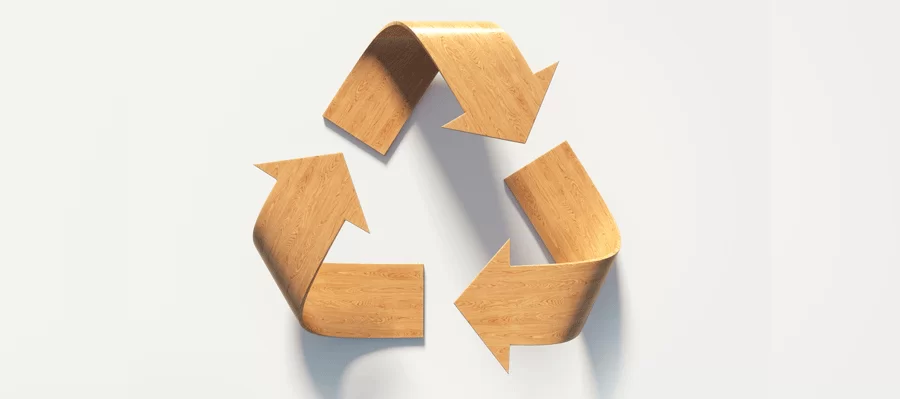
Incineration is also not advisable, both because it could lead to the loss of materials that are still usable if not properly sorted, and because this process negates one of the main characteristics of wood, namely its recyclability. If you want to do the right thing, in terms of national and community laws and from a sustainability perspective, you should direct wood waste to ecological platforms for separate collection, from which they will be sent for recycling.

Old parquet is still a resource
In recycling plants, wood is cleaned and crushed into pieces called chips. Foreign bodies are removed before special mills further reduce the size of its fibers. Finally, the parquet boards are subjected to drying and dry pneumatic cleaning systems. Semi-finished products are obtained from these, which are processed with resins and give rise to the so-called proto-panels usable both for furniture production and for creating interior or exterior cladding. Furthermore, wood waste is the raw material for briquettes that, instead of classic logs, are used to operate heating stoves; while some industrial waste is valuable for the paper industry which derives cellulose pulp from it. Even the construction industry, often a source of wood waste, is a consumer of it during the production of wood-cement blocks.
Finally, do not overlook a preliminary step: request from Woodco among its FSC or PEFC certified products that come from responsibly managed forests.