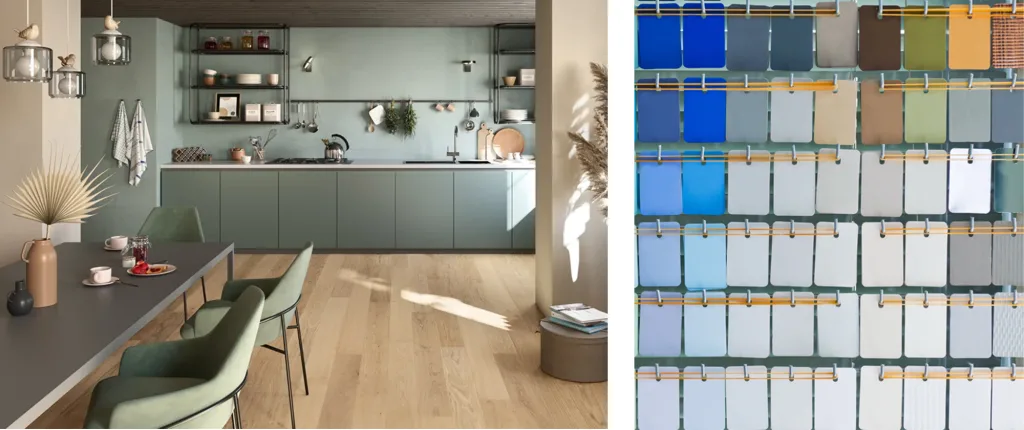


Between parquet or marble flooring, the choice is more than ever an expression of personality and character: yours and those you want to give to your home. And if what you want to create is an environment with a classic style, yet also welcoming and warm, wooden flooring has few rivals.
Color variety: a point in favor of parquet
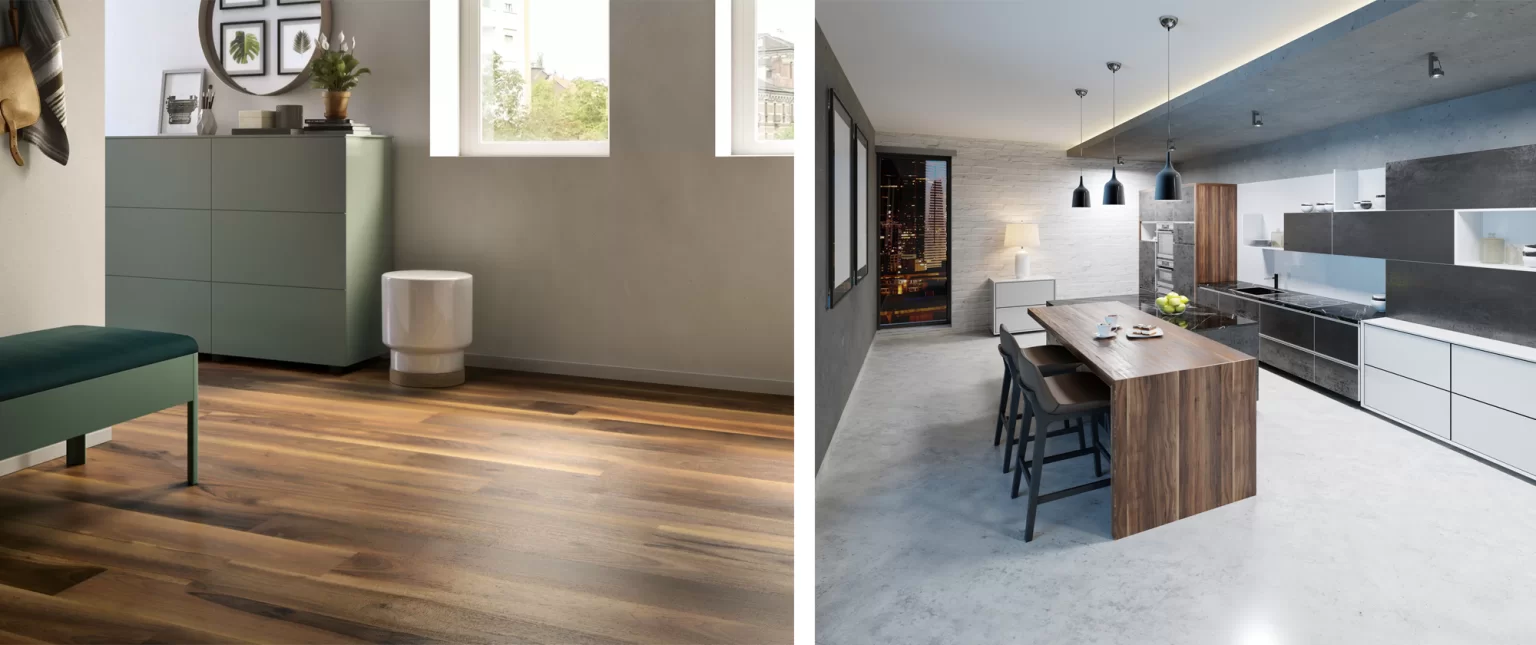
The sensations just described, those of warmth and comfort, are especially typical of darker colored boards and therefore of woods like walnut, some shades of oak, teak, and iroko. But the beauty of parquet also lies in its ability to offer you a wide range of solutions and selections: with its lighter woods, it moves away from rustic and retro atmospheres and represents a valid option for environments with a more modern touch, whether they are homes or – why not? – offices. Bright and compatible with a multitude of furnishings and decor, marble floors do not have as wide a color variety and are typically in gray, white, red-brown colors.

Wood and marble flooring: united by elegance
Compared to a material like marble, inevitably colder and more aloof when compared to wood, parquet also has the advantage of being a natural acoustic and thermal insulator, something that marble is not capable of doing. Being made of a living material, its boards tend to at least partially undergo the effects of weather and climate and therefore must be installed properly, maintained and cared for attentively. Equally elegant, marble is divided by characteristics into crypto-crystalline limestone, serpentine, and crystalline limestone types, and despite being extremely durable and long-lasting – often described as “eternal” – it will also require frequent attention and careful cleaning.
Parquet and marble: initial costs and lifecycle
Typically, parquet is more prone to wear and scratches and the typical signs of time, which often cause changes even in its color, such as the phenomenon of oxidation. But these changes are not necessarily negative: on the contrary, they can give your spaces a more lived-in look and thus even more charm. Wooden floors have, compared to marble, a lower initial cost, but some additional burdens during their lifecycle, as they need to be treated and polished with specific products and solutions. However, do not think that marble, which has a generally higher purchase price, requires less attention. For example, it is not advisable to lay it in the kitchen where contact with certain cleaning products could end up ruining its appearance; and in general, it must be washed and waxed frequently to preserve its refinement and aesthetic appeal over time.