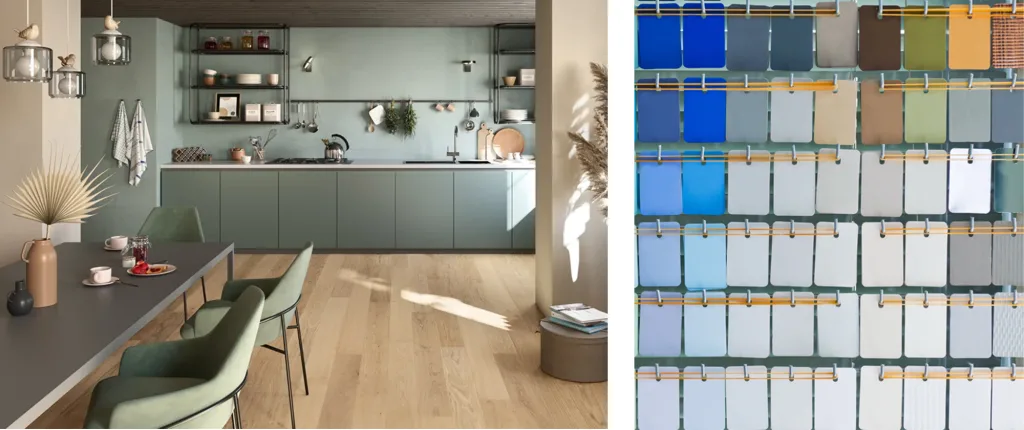


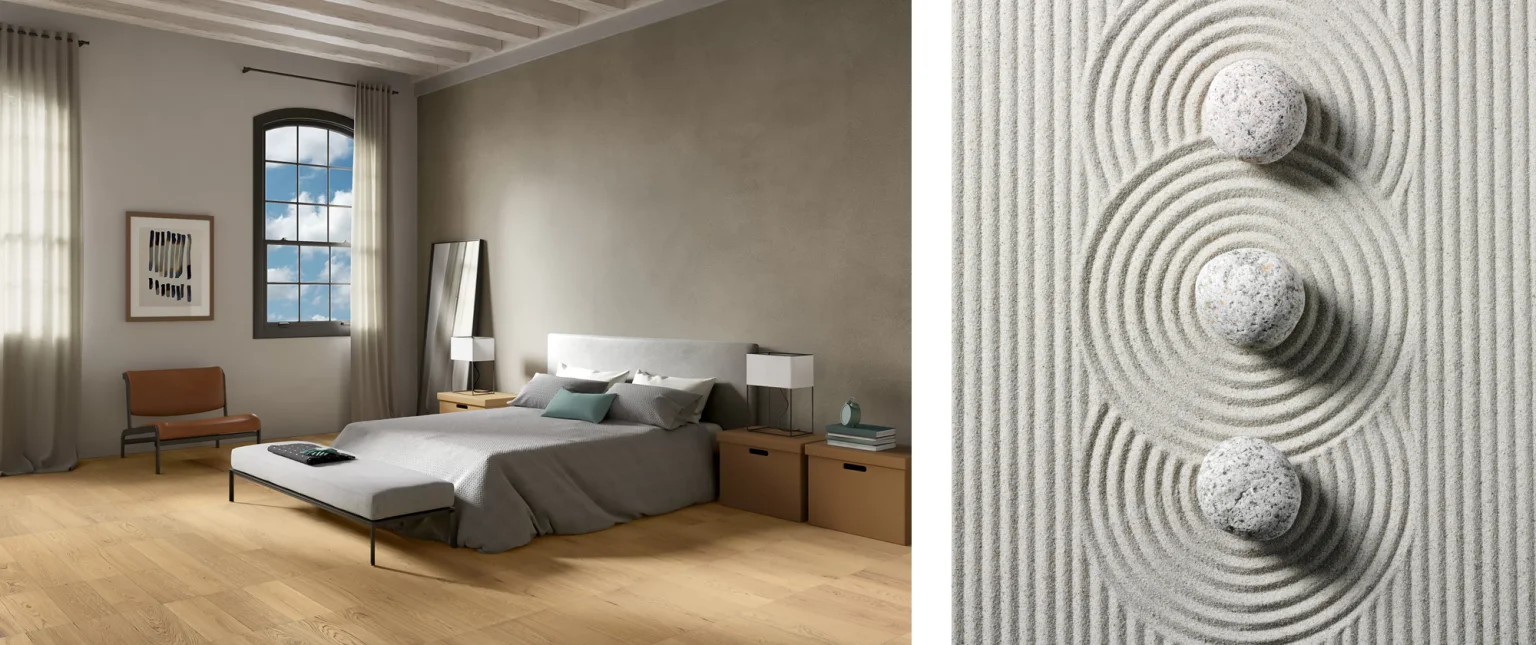
Originating from China where it was officially codified between the 3rd and 4th centuries AD, the doctrine – or better, geomantic art – of Feng Shui proposes a series of criteria to which Oriental architecture is inspired for the design of homes and buildings in general. We will soon explain what all this has to do with the world of parquet.
What is necessary to know from the outset is that the ancient discipline has, among its objectives, the aim of promoting the flow of vital energy in living spaces, achieving harmony with the spirit of those who live there every day. Harmony is thus its ultimate goal, and it is expressed in five ways and through as many elements.
In wood, peace and longevity
Each of them – water, fire, earth, metal, and naturally wood – is associated with a particular color and possesses a precise symbolic meaning. In the case of wood, the concepts of peace and longevity are associated with it. In the West, some ideas of Feng Shui can certainly influence, if not architectural works and projects, at least choices in interior decoration and design.
Freeing oneself from the many useless objects that often occupy homes and offices without reason, and according to this discipline hinder the free flow of positive energies, is a first step to embracing this philosophy. Equally important is favoring rounded or otherwise regular shapes, both for environments and for furnishings.
Parquet, synonymous with naturalness
Fundamental is the orientation of rooms based on the cardinal points, and in this respect, Feng Shui embraces the belief that maximum rest and comfort are achieved by sleeping with the head facing North and the legs to the South.
But Chinese wisdom favors naturalness and within a modern construction, this finds full expression in the installation of parquet. Also because its boards can come in various shapes and colors, for example, that gray and dove that refer to metal, a sign of strength and creativity according to Feng Shui.
For every wooden floor, a Feng Shui finish
The necessary condition for ensuring that harmony and positive energies are the dominant notes of your space is that the wood of the parquet is also subjected to treatments as sustainable as possible: that is, natural.
This is what Woodco offers you thanks to the finishing of its products with natural oil; and the painting done with non-toxic, solvent-free formulas, compliant with regulations.
Parquet is… the surface closest to the Earth
In the past, we have also dealt with another trend that seems to perfectly align with the dictates of Asian geomancy. It is earthing or barefooting, in short, the habit of walking barefoot, facilitating the circulation of electrons from the ground to the body and aiding healing processes from some injuries or illnesses. If you cannot do it on bare earth, a wooden floor is an excellent substitute.
The benefits are also hygienic, as it is estimated that at least 400 bacteria are potentially carried by footwear into a domestic or work environment. But wearing a shoe means not enjoying the psychophysical benefits ensured by walking on a natural surface: complete relaxation of the lower limbs and spine; venous return of blood to the legs, to avoid any possible swelling.
Healthy parquet, well-being for everyone
Parquet is made of living material, which conveys feelings of warmth and welcome and to stay well, it needs the same conditions that ensure people’s well-being. Environments with temperatures between 18 and 22 degrees Celsius, a humidity rate between 40 and 65%. A wooden floor transmits the warmth of the material to the sole of the foot and toes: it is a massage, or a simple and immediate gymnastic exercise, a relaxing treatment always available.
In Finland, teachers and students take off their shoes at school, convinced that this promotes relaxation and at the same time aids concentration. At home, walking or crawling barefoot on parquet offers children advantages both from a postural point of view and then from the correct development of the entire musculoskeletal system.